Discover Hallstatt: Europe’s Timeless Alpine Jewel
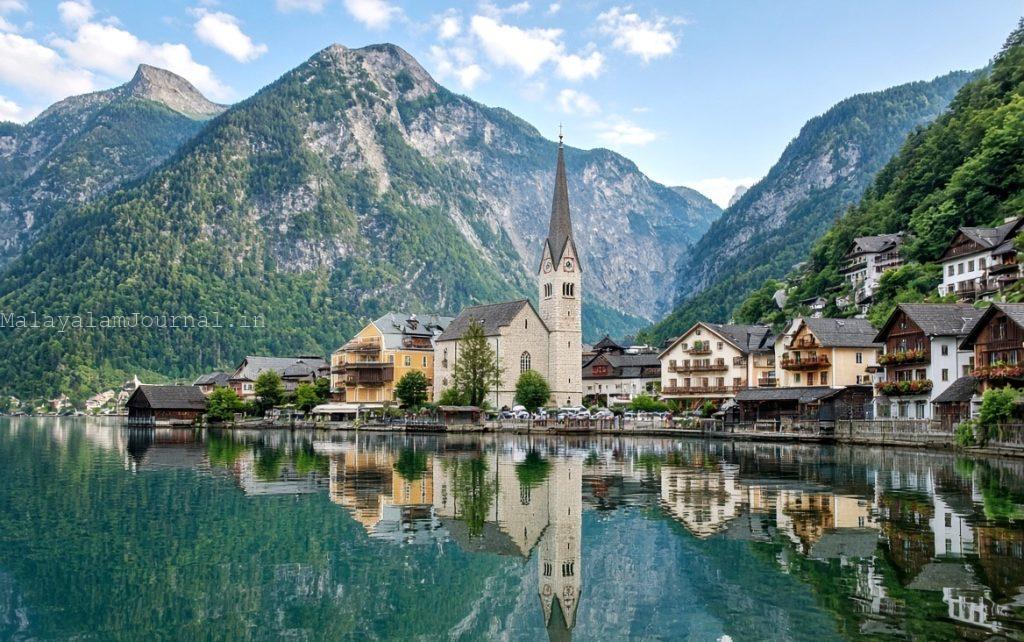
There are places in the world that do not merely impress you — they quietly rearrange something inside you. Hallstatt, a small village nestled between a mirror-like alpine lake and towering limestone mountains in Austria, is one of those places. Walking its narrow cobbled lanes, looking up at the slender church steeple against a clear blue sky, or gliding across the water on a ferry while the village reflects perfectly on the lake, you begin to understand why some travelers say that those who have seen Europe and those who have not are living in two different worlds.
The first thing that strikes most visitors is not the scenery alone, though the scenery is almost unreal. It is the sense that everything here has been cared for with deliberate affection over centuries. The wooden balconies overflowing with red geraniums, the perfectly maintained pastel façades, the absence of litter, the respectful quiet of people moving through the streets — these details are not accidental. They are the visible result of a culture that treats its history as a living responsibility rather than a marketing slogan.
Hallstatt has been inhabited for over 7,000 years. Salt mining made it prosperous in the Bronze Age, and the Hallstatt culture is still studied by archaeologists worldwide. Yet the village never became a theme park. The church still holds services. Locals still live in the same houses their grandparents occupied. The lake is still clean enough for swans to glide past tourist boats. This balance between preservation and continued life is rare, and it is one of Europe’s quietest achievements.
Standing in the main square under the green umbrellas of outdoor cafés, watching visitors from every continent take photographs of the yellow Hotel Grüner Baum, you realize something important. The beauty is not just visual. It is moral and civic. The way the buildings are maintained, the way public spaces are kept immaculate, the way even the smallest details — a flower box, a stone staircase, a wooden shutter — receive attention, speaks of a collective agreement that beauty and order are worth the effort.
Many travelers from Asia, Africa, and Latin America leave Hallstatt with the same thought: “Why can’t we do this at home?” The answer is not money. Hallstatt is not the richest place in Austria. The answer lies in attitude — a long cultural habit of treating the shared environment as something sacred. History is not something to be demolished for new construction. It is something to be protected so that future generations can still feel its weight and grace.
This is where the deeper lesson begins. Europe has many problems — economic pressures, political tensions, demographic changes. Yet the places that continue to move visitors most deeply are those that have refused to erase their past. The carefully restored churches, the pedestrian zones that prioritize people over cars, the strict building codes that prevent visual chaos — these are not nostalgic luxuries. They are statements of values. They say that human dignity includes the right to live among beautiful, coherent surroundings.
When you step inside the parish church of Hallstatt and look up at the old chandelier and the stained-glass windows, or stand before the simple wooden crucifix on the wall, you feel a continuity that is increasingly rare in the modern world. The same continuity is visible when you take the ferry across the lake and watch the entire village appear like a painting against the mountain wall. Nothing here feels temporary. Everything feels considered.
For travelers from countries where rapid development often means the destruction of old neighborhoods, Hallstatt offers a different model. Progress does not have to mean erasing memory. It can mean refining and protecting what already exists. Cleanliness is not a luxury for the rich; it is a daily civic practice. Public space is not an afterthought; it is the stage on which community life unfolds with dignity.
The experience also changes how one sees ordinary human behavior. People in Hallstatt do not rush. They sit in cafés for long conversations. They walk slowly. They notice the light on the water. This slower rhythm is not laziness — it is a different relationship with time. In a world that constantly demands acceleration, places like Hallstatt remind us that depth requires stillness.
Of course, Hallstatt is not perfect. Like many beautiful destinations, it faces the pressure of overtourism. The local government has introduced visitor management measures, including timed entries during peak season, to protect the village’s fragile character. This too is instructive. Even the most beautiful places must be guarded if they are to remain beautiful. Uncontrolled popularity can destroy the very qualities that made a place special.
Yet the core remains intact. The mountains still rise dramatically behind the village. The lake still reflects every cloud. The church steeple still points toward the sky. And the sense of quiet pride that the place carries continues to affect everyone who walks its streets with open eyes.
Travelers often return home changed. They begin to notice the litter on their own streets more sharply. They start questioning why historic buildings in their cities are allowed to decay. They develop a new appreciation for craftsmanship, for maintenance, for the idea that beauty is a form of respect — respect for the past, for the community, and for future generations.
This is the real gift of places like Hallstatt. They do not simply provide Instagram moments. They provide a living demonstration that another way of organizing human life is possible — one in which history is honored, public spaces are cherished, and everyday surroundings are treated with care.
If life ever grants you the chance to travel through Europe, do not limit yourself to the great capitals alone. Make time for the smaller places that still carry the old spirit. Walk the lanes of Hallstatt. Sit by the lake in the late afternoon light. Look up at the mountains and the church tower. Let the place work on you slowly. You may leave with more than photographs. You may leave with a new standard for what a human settlement can be.
And that standard, once absorbed, is difficult to forget. It becomes a quiet measuring stick against which other places — including our own — are gently, and sometimes uncomfortably, compared. In that comparison lies the beginning of change.
For more information about visiting Hallstatt, see the official tourism site: https://www.hallstatt.net/en/
To understand its UNESCO World Heritage status, visit: https://whc.unesco.org/en/list/806
Hallstatt does not shout. It simply exists with quiet excellence. And in a noisy world, that excellence feels almost sacred.
#Hallstatt #AustriaTravel #EuropeTravel #AlpineBeauty #HallstattAustria #TravelInspiration #HeritageTravel #CulturalTravel #BucketListDestination #LakeHallstatt #EuropeanVillages #SustainableTourism #TravelEurope #AustriaTourism #ScenicEurope #TimelessTravel #Wanderlust #TravelTheWorld #HiddenGemsEurope #GodsOwnIndiaTravel